Recently, a team led by Professor Wu Hong from the Liver Transplant Center of West China Hospital (WCH), Sichuan University was invited to the Faculty of Medicine of Alexandria University in Egypt for academic and surgical exchanges. During the visit, Professor Wu Hong's team collaborated with local expert teams to perform three complex laparoscopic liver resection surgeries and participated in the inaugural meeting for the establishment of a robotic surgery center.
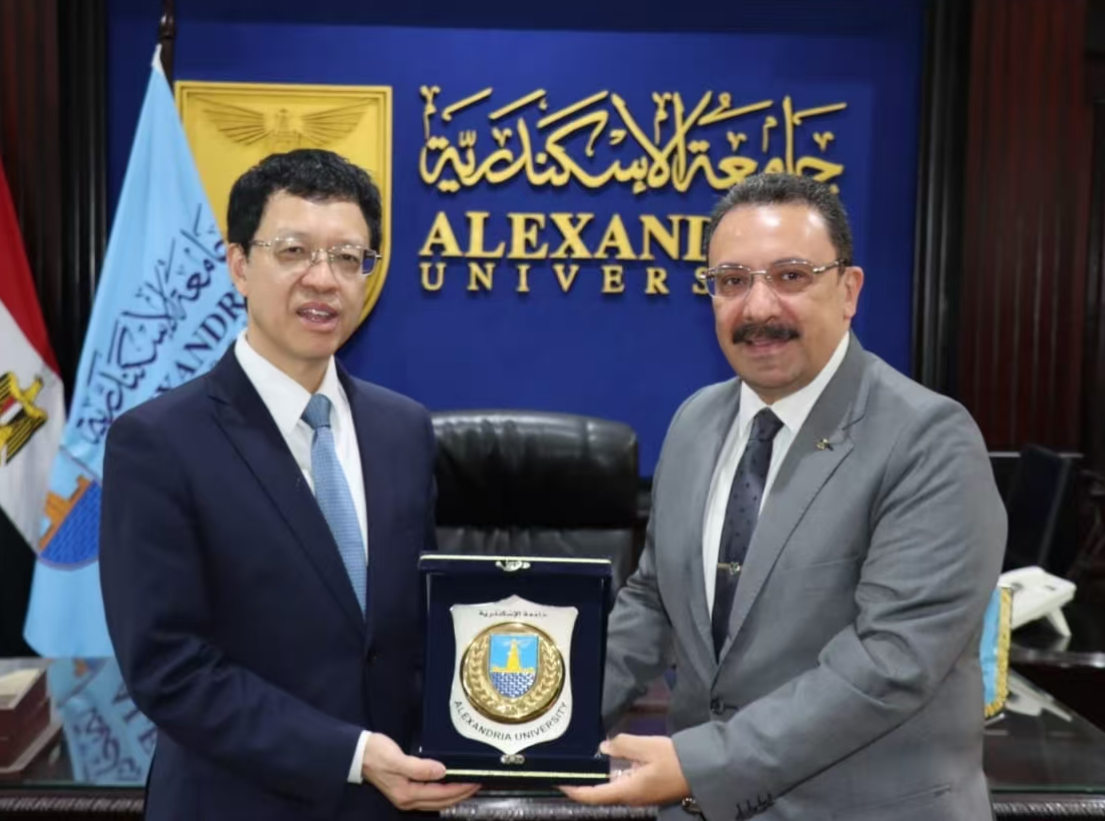
The West China Hospital team, consisting of Professor Wu Hong, Professor Li Qian from the Anesthesiology Department, and Associate Professor Liao Anque, partnered with Egyptian Professor Ahmed Elgendi to complete three complex laparoscopic liver resections at the university's affiliated Almowasah University Hospital. One of these procedures marked Egypt's first indocyanine green (ICG) fluorescence-guided laparoscopic liver resection. The patient, who had liver metastases from rectal cancer and a history of four abdominal surgeries and radiotherapy, presented an extremely challenging case. With close collaboration from the West China team, a complex laparoscopic central hepatectomy was successfully performed with a blood loss of only 200 ml. The surgeries were open for observation to over a hundred faculty members and students from Alexandria University's Faculty of Medicine. The meticulous and skilled coordination of the West China medical team received high praise from their Egyptian counterparts. All three patients recovered well postoperatively. The President of Alexandria University awarded Professor Wu Hong a commemorative medal in appreciation of the WCH team's assistance in performing the university's first ICG fluorescence-guided minimally invasive liver resection. Local Egyptian media provided comprehensive coverage of the academic exchange and surgical demonstrations.
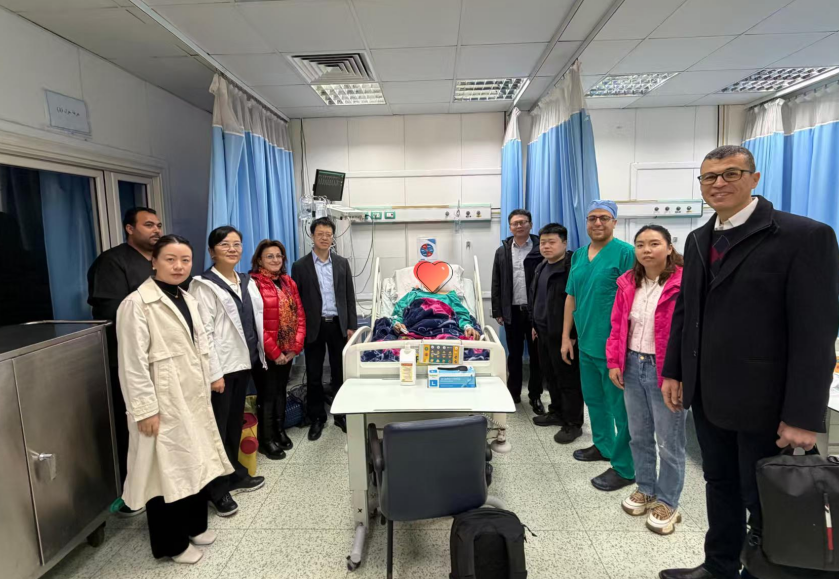
During the inauguration meeting for the Alexandria University Robotic Surgery Center, Professor Wu Hong delivered a special lecture titled "Application of Surgical Robots and Telesurgery in Hepatobiliary and Pancreatic Surgery," sharing the latest research advancements from our hospital. Subsequently, both parties engaged in in-depth discussions on the clinical application prospects of remote robotic surgery and reached a preliminary consensus for future collaboration.
This exchange extends the "Belt and Road" International Training Course on Minimally Invasive Liver Techniques, which our hospital has hosted for three consecutive years with support from China's Ministry of Science and Technology. From 2023 to 2025, our hospital has trained 73 key hepatobiliary and pancreatic surgeons from 21 countries across Asia, Europe, Africa, and South America. Through a comprehensive teaching model combining "special lectures + live surgical demonstrations + simulation training + clinical practice + case discussions," the program has comprehensively enhanced participants' minimally invasive diagnostic and treatment capabilities, establishing a multi-regional, multi-level international medical training network.
Leveraging the accumulation from this training, our hospital has built a long-term international cooperation mechanism for technology export, talent cultivation, and scientific research collaboration. Numerous trainees have successfully performed landmark techniques in their home countries upon returning, such as their nation's first fluorescence-guided hepatectomy or complex minimally invasive liver cancer surgeries. Alexandria University in Egypt has consistently sent participants for three consecutive years, and the local rate of minimally invasive liver surgery has increased from less than 3% in July 2023 to 28%. Our hospital has facilitated a shift in China's liver minimally invasive techniques from "training export" to "joint system building," continuously promoting China's advanced surgical techniques globally and laying a solid foundation for building a high-level international medical technology cooperation network.
